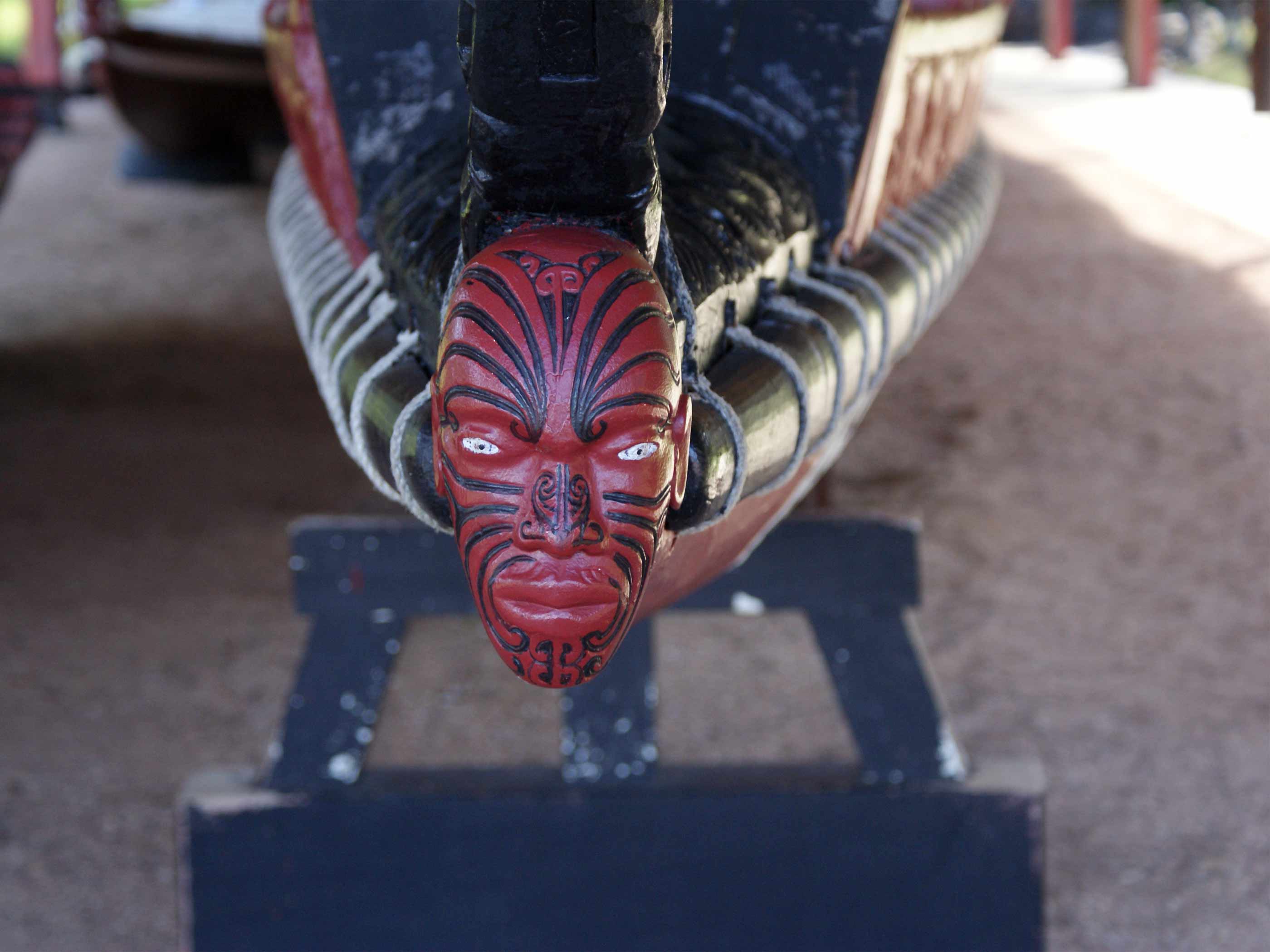


As soon you get off the plane in Auckland, you are hit with a big part of New Zealand's culture.
While going through Arrivals, you pass under a wooden archway decorated with Maori style carvings. This was a big surprise for us. We knew Maori lived in New Zealand but to have it slapped in your face like this was a nice shock.
New Zealand has a rich, diverse culture that travellers fall in love with.
This is a country with two distinct cultures that intermingle and embrace each other.
New Zealand has a short but rich history and it is impossible to understand its culture without knowing a little about its history.
The Maori people (when pronounced correctly is sounds like “Maodi”) were the original inhabitants of New Zealand. They named it 'Aotearoa' which roughly means 'The Land of the Long White Cloud'. There are different accounts about how they settled on the island but it is thought they travelled from Polynesia in the 13th century.
The Maori culture is steeped in mythology and tradition which has helped to keep this fascinating way of life alive. Although the culture still exists, Maori live a very different life now days as modern life continues to influence its progression.
Abel Tasman was the first European to first visited New Zealand in 1642. Maori killed some of his crew and no Europeans returned until James Cook in 1769. Soon European settlers were arriving and this disrupted the Maori culture.
Settlers traded muskets (among other things) to the Maori in exchange for land and resources. This led the Musket Wars, Maori decimated neighbouring tribes with this new Western invention and claimed land.
On 6th February 1840, the Treaty of Waitangi was signed which gave Britain sovereignty over New Zealand and gave Maori the rights of British subjects.
Wars, unrest and injustices followed but today, both cultures live together in relative harmony.
About 78% of New Zealand’s population are of European descent, 15% are of Maori descent. Most of the Maori population live on the North Island. Maori groups run cultural shows which give a further insight into the Maori culture.
We recommend visiting one of these as they can be quite an experience! Unsurprisingly given their history, we found New Zealand felt a lot like being in the UK. New Zealanders tend to have quite liberal views and the architecture is quite similar.
New Zealanders also tend to be very friendly and straight forward. There are only 4 million of them so maybe they have more time for each other.
A great divide (and source of much amusement) in New Zealand is between North Islanders and South Islanders. The stereotype says that North Islanders are more urbanised, less friendly and speak very fast and the South Islanders are more laid back, friendlier and speak slower.
We found that South Islanders were more laid back did speak slower but both sets of Islanders were just as friendly. However, given that only 1 million people live on the South Island compared to 1 million in Auckland alone, you can understand why people might find South Islanders friendlier.
The pace of life in both islands is noticeably different too, however even the busier North Island has more than enough space for you to get away from it all and feel like you are in the middle of nowhere.